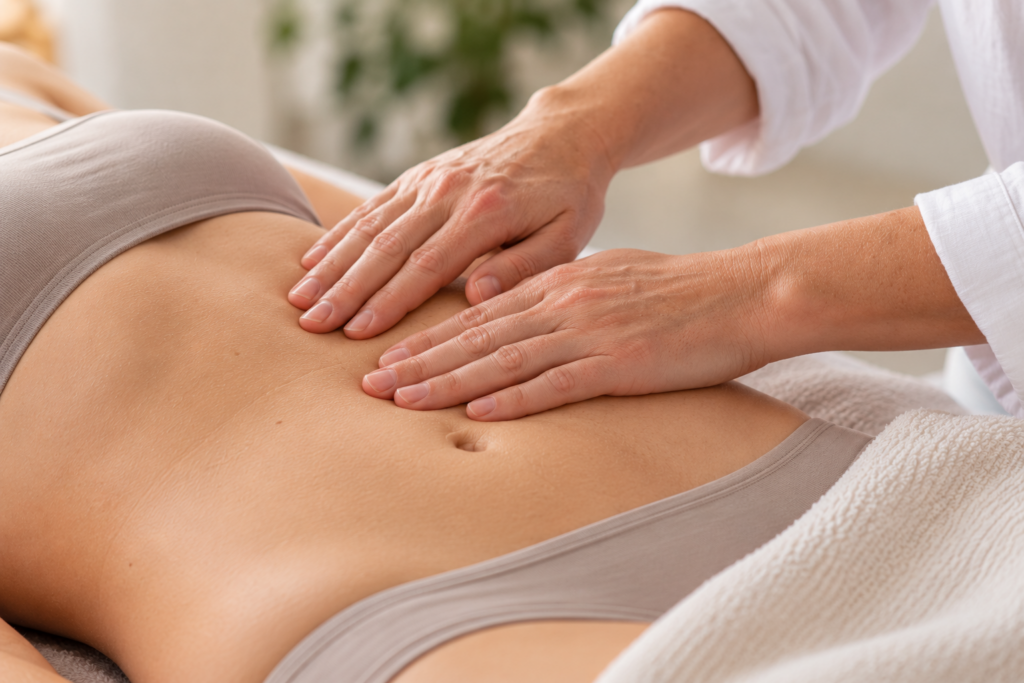
Osteopathy adapted to perimenopause and menopause with Dr Valérie Namer DO

Aeroparc Gilze-Rijen Koffie/thee, lunch & syllabus Engels

This two-day course, led by Dr Valérie Namer, DO and endocrinologist, delivers an up-to-date, evidence-based overview of menopause.
Blending manual therapy insight with endocrinology, it offers practical tools for everyday clinical practice.
Participants will clarify key physiological changes and the broad symptom spectrum.
The course challenges outdated assumptions and promotes a multidisciplinary, patient-centred approach.
Designed for osteopaths, physiotherapists, and chiropractors, it strengthens clinicians’ confidence in supporting women through this transition.

Objectives

  • Examine the key physiological and neuroendocrine changes that occur as women transition from perimenopause through menopause and into post-menopause, ensuring clinicians understand the full spectrum of biological adaptations rather than relying on outdated or oversimplified narratives.
  • Clarify the breadth of symptoms associated with menopausal transition—including musculoskeletal, neurological, urogenital, vasomotor, psychological, and metabolic changes—to help practitioners avoid misattributing, minimising, or overlooking presentations commonly encountered in clinical practice.
  • Address persistent misconceptions and societal biases, particularly the belief that menopausal symptoms are inevitable, unmodifiable, or “just part of ageing”, by presenting current evidence for effective lifestyle, manual therapy, behavioural, and medical interventions.
  • Challenge gender stereotypes within healthcare, equipping clinicians with the knowledge to advocate for women’s health and to recognise where historical patterns of dismissal, under-treatment, or misdiagnosis have occurred.
  • Provide an updated, integrative overview of menopause physiology, highlighting the importance of a global, patient-centred approach that incorporates prevention, early identification of risk factors, long-term musculoskeletal and metabolic health, and collaboration across disciplines—including osteopathy, physiotherapy, chiropractic, gynaecology, mental health, and general practice.
  • Support clinicians in developing nuanced care strategies for women aged 35 to 100, acknowledging the wide variation in menopausal experience and the impact of comorbidities, lifestyle, trauma history, physical activity, and social determinants of health.
  • Outline the major developments in menopause management over the past 30 years, from the shifts triggered by the early WHI findings to contemporary evidence on hormone therapy, non-hormonal options, and holistic care models.
  • Explain the clinical significance of the FDA’s recent removal of the black-box warning on oestrogen therapy, placing it in context with emerging research, international guidelines, and the implications for safety, prescription confidence, and patient education.

Day 1

– Part 1:

  • The Cost and Burden of Menopause
  • Menopause in Numbers Around the World
  • Hormonal Regulation
  • The Gonadotropic Axis

– Part 2:

  • EBP and the evolution of guidelines in the past 30 years
  • From treatment to care
  • Gender bias during menopause
  • The truth about HRT the good, the bad and the ugly

– Part 3 : Physiology of perimenopause and menopause

  • Sequence of hormonal changes
  • Influence of the loss of sexual hormones on other hormonal axis
  • Symptoms
  • Metabolic consequences

Day 2

– Part 4 : Influence of perimenopause and menopause on health and well beeing

  • Osteoporosis
  • Cardiovascular health
  • Diabetes
  • Auto-immune diseases
  • MSK desorders
  • Mental health
  • GSM

-Part 5 : Adaptation of osteopathic care for menopausal women

  • Global care and multidisciplinary approach
  • Clinical Evaluation Tools
  • Technics
  • Recommendations: prevention, patient centered care

Part 6 : Clinical cases

Valérie Namer is a French-trained medical doctor and osteopath. She earned her Doctor of Medicine degree, specializing in endocrinology, from Claude Bernard University in Lyon, France, in 1997. She later obtained her Diploma in Osteopathy (DO) from the Centre Ostéopathique du Québec (COQ).
Based in Montreal, Dr. Namer practices osteopathy in various multidisciplinary clinics that emphasize integrative medicine since 2006. She also teaches postgraduate courses in her areas of expertise.
Expertise
Dr. Namer is a strong advocate of the holistic osteopathic approach and believes it is greatly enhanced by promoting a healthy lifestyle. She incorporates nutritional coaching into her treatments and works closely with multidisciplinary teams familiar with osteopathic care.
She has served as a guest lecturer in nutrition at the Faculty of Science at the University of Quebec in Montreal and was a lecturer in the Complementary and Alternative Medicine (CAM) program at McGill University. For several years, she has led seminars in endocrinology and nutrition for osteopaths across Canada, Europe and Latin America.
Valerie Namer is currently a Master Dissertation Supervisor at the School of Health Sciences Fribourg, University of Applied Sciences and Arts Western Switzerland (HES-SO). Since 2023, she has also been a member of the Science and Health Committee at Séréna Québec.
Memberships
Dr. Namer is a member of:
  • Ostéopathie Québec
  • Collectif Femmes de Santé (France)
  • ESHRE – European Society of Human Reproduction and Embryology
Osteopathy adapted to perimenopause and menopause with Dr Valérie Namer DO
Totaal
€ 650,00

Inschrijven voor deze cursus?

Login

Cursusdata

16 mrt 2027 t/m 17 mrt 2027 09:00 - 17:00

Zelfstudie

Geen zelfstudie noodzakelijk

Accreditatie

NRO
Wordt aangevraagd
Maximale punten: - Totaal uren: -
NOF
Wordt aangevraagd
Maximale punten: - Totaal uren: -
GNRPO-BCO
Wordt aangevraagd
Maximale punten: - Totaal uren: -